

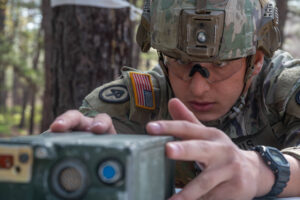
COTS for military power without the hidden costs
By Christian Jonglas, Technical Support Manager, GAIA Converter Reliability and performance are absolute requirements in electronic systems for defense applications.

Lessons from the Russia-Ukraine frontline: Autonomous vehicles, AI-driven logistics, and quantum-enhanced defense security are recalibrating military strategy.
By Chris Morton & Bianca Nobilo Chris Morton is the Global Industry Director for Aerospace & Defense at IFS. A

The Battle for the Future of Defense: Titans, Tech Upstarts, and the Trillion-Dollar Shift
Publisher’s Note – John Reardon In a Washington boardroom, defense officials pore over a sprawling concept: the “Golden Dome”—a trillion-dollar
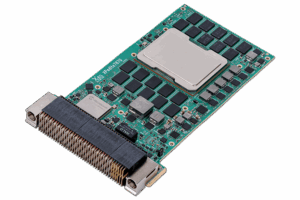
XPedite7870 Intel® Xeon® D-2800 Processor-Based 3U VPX-REDI Module with 64 GB of DDR4, 100 Gigabit Ethernet, and SecureCOTS™
The XPedite7870 is a secure, high-performance single-board computer based on the Intel Xeon D-2800 series (formerly Eddy Lake) of processors,
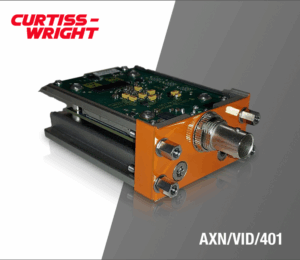
Curtiss-Wright Adds Digital Video Encoder Module to Industry-Leading Axon Family of Compact Flight Test Instrumentation System Building Blocks
AXN/VID/401 Axon module automatically detects, captures, and compresses a single HD-SDI/3G-SDI channel and supports independent low-data-rate video channel for real-time
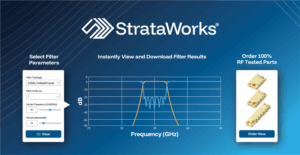
Nuvotronics Launches StrataWorks® Platform, Ushering in a New Era of Radio Frequency Design
Nuvotronics announced the launch of the StrataWorks platform, a web-based design solution that enables customers to rapidly create and customize
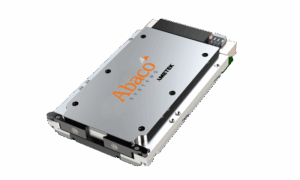
Abaco Systems Launches GRA117SVIO Open VPX 3U Video Graphics and GPGPU Card Enabling Real-Time Video Capture and Processing
AMETEK Abaco Systems introduces the GRA117SVIO, a SOSA-aligned Open VPX 3U video graphics and GPGPU card. It’s powered by the
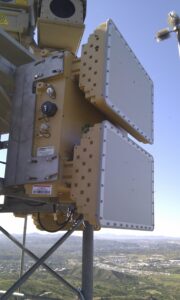
Blighter’s New Long-Range Border Surveillance Radar Detects a Person at 15km with just 4 Watts of Power.
Blighter, a pioneering designer and manufacturer of electronic-scanning ground movement radars, has unveiled its longest-range innovative border surveillance radar system,
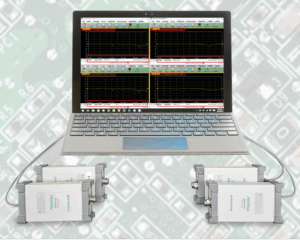
Anritsu Introduces Simultaneous Sweep on MS46131A VNAs, Enabling Efficient Four 1-Port Simultaneous Measurements.
Anritsu is announcing the launch of a new Simultaneous Sweep capability for its ShockLine™ MS46131A Vector Network Analyzer (VNA) —the
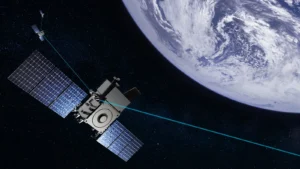
BAE Systems awarded a $1.2 billion contract for a US Space Force missile warning and tracking satellite system
BAE Systems will serve as the prime contractor for the Resilient Missile Warning & Tracking (RMWT) – Medium Earth Orbit

Anduril and Meta Team Up to Transform XR for the American Military
Anduril and Meta are partnering to design, build, and field a range of integrated XR products that provide warfighters with
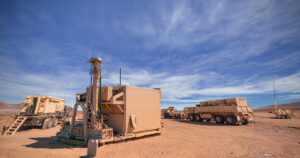
Northrop Grumman and Marshall Land Systems Collaborate for Cutting-Edge Command and Control Systems
Northrop Grumman Corporation and Marshall Land Systems signed a Memorandum of Understanding (MOU) to advance command and control hardware solutions
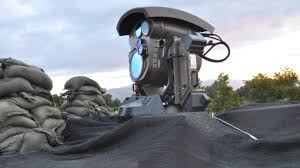
Israel MOD, Israeli Air Force, and RAFAEL Reveal: Scores of Enemy Threats Intercepted by High Power Lasers for the First Time in War
During the Swords of Iron War, the Israel Ministry of Defense (IMOD) Directorate of Defense Research & Development (DDR&D), the
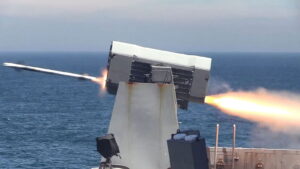
RTX’s Raytheon delivers 250th RAM launcher to US Navy
Raytheon, an RTX business and German industrial partner RAM-Systems GmbH, delivered the 250th RAM MK49 Guided-Missile Launching System (GMLS) to
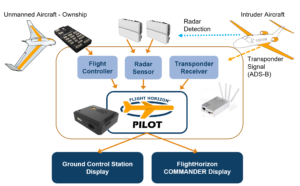
Vigilant Aerospace Selected for US Air Force EWAAC Contract as Preferred Vendor for Uncrewed Airspace Management
Multi-Sensor Traffic Management Solution FlightHorizon Provides New Capabilities for Next Generation of Warfighters Vigilant Aerospace Systems, Inc., provider of multi-sensor