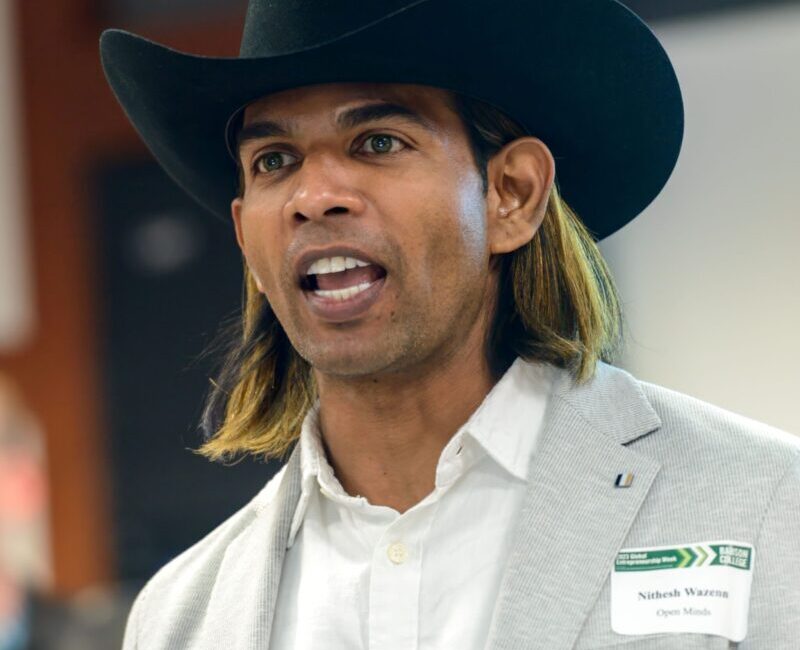
Tampa-based DOLGO founder Nithesh Wazenn explained that the platform, which can be uploaded to a phone or computer like ChatGPT, will tackle one of the biggest challenges facing maritime: the vanishing, aging workforce. As a measure of the scale of the problem in the United States today, the average age of shipyard workers is 55 years old. This is against a backdrop of shipbuilding demand being set to double over the next decade.
“I am super proud to launch DOLGO,” Mr. Wazenn said. “It’s easy to use, intuitive, and designed by gamers. This is the moment AI enables maritime to claw back time. Skills shortages are paralyzing the sector. It’s a ticking time bomb. DOLGO can provide a solution by retaining the expertise before it leaves forever. One platform driven by machine learning, constantly being updated with the knowledge of hundreds, then thousands of workers across a vast array of tasks.”
DOLGO has been spun out of the National Oceanic and Atmospheric Administration (NOAA) Ocean Enterprise Accelerator and has built its AI platform and undertaken testing with the University of South Florida’s marine science lab. The software enables workers to share knowledge, helping companies retain skills for both new and existing engineers.
Mr. Wazenn described how the platform gives shipyards a private AI system that continuously updates with proprietary knowledge from their workforce. Workers will be able to call each other on the platform to seek advice on engineering problems while the AI learns on the job.
He added that the DOLGO software further tackles the long-standing issue of ‘ownership’ of know-how. He also noted that shipyards are reporting that older workers can be reluctant to share valuable knowledge with younger colleagues who are paid the same wage, leading to a ‘race to the bottom’ as new workers’ skills cannot replace those who are retiring.
Mr. Wazenn emphasised that AI will incentivise workers to share their expertise. On DOLGO, the engineer is rewarded with bonuses or benefits each time their knowledge is downloaded from the platform, using a concept similar to a Spotify download.
“Retaining expertise will not only drive efficiency and improve safety, but it will also prevent costly and time-consuming mistakes and equipment damage,” he added. “In addition, with turnover of younger workers high and with shipyards reporting attrition rates of 20%, we can help reduce training costs by automating learning.”
Mr. Wazenn further outlined that the platform can be deployed across a variety of maritime roles, from equipment manufacturers and seafarers to flag states, class societies, and even shipbroking and vessel operations.
“It’s early days, and we’re focusing the AI on shipyards and autonomous vessels for now, where the skills shortage is acute, and the training demand is high,” he said. “But the potential to capture skills and training across maritime businesses is massive.”
DOLGO is one of seven pioneering ocean startups to be chosen by the Seaworthy Collective, a Miami-based non-profit that supports blue tech entrepreneurs. With only 10% of startups accepted into the program, companies can participate in full scholarships with no equity or fees through Seaworthy’s $14M National Oceanic and Atmospheric Administration (NOAA) Ocean Enterprise Accelerators partnership, The Continuum.