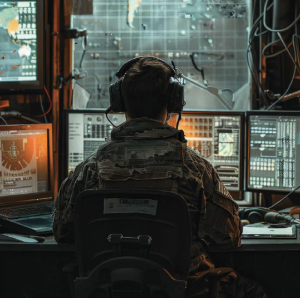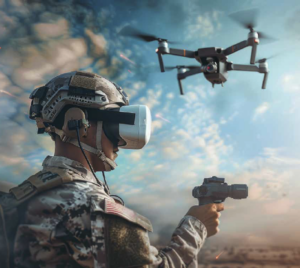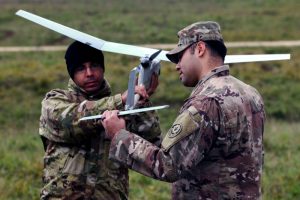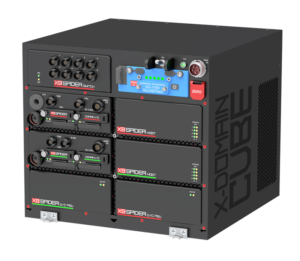
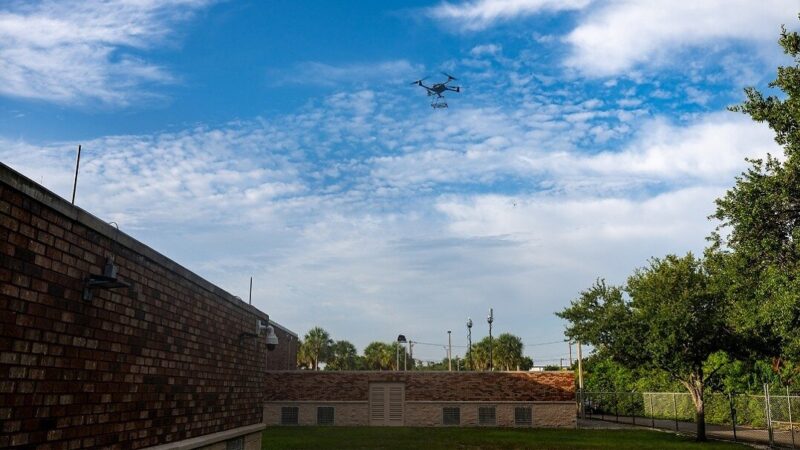
NetSense™ system combines 5G, commercial technology and AI to detect Unmanned Aerial Systems.
Lockheed Martin, in collaboration with Verizon, NVIDIA, Keysight Technologies, ODC and Astris AI, recently showcased how commercial off-the-shelf (COTS) technologies can make detecting and tracking unmanned aircraft systems (UAS) more accessible, faster to deploy, and easier to scale for public and critical infrastructure protection.
In a July demonstration in the Miami area, the NetSense™ Airspace Awareness-as-a-Service™ system demonstrated an AI-enabled capability to identify, track, and monitor UAS using existing 5G networks.
The technology has broad commercial applications across critical infrastructure, large-scale events at stadiums, utilities such as power plants, and everyday places people depend on, like schools, hospitals, and airports. City, state and federal government customers can also gain proactive monitoring and alerts from the NetSense solution.
THE BIG PICTURE
As drones become more affordable, capable and widely available, the need for persistent, intelligent airspace awareness to protect the public grows. By leveraging existing technology, the NetSense solution can help protect people and critical infrastructure across a wide range of environments.
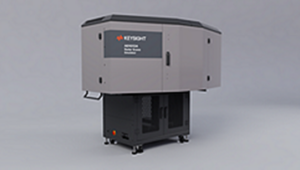
The successful live demonstration took place in a critical, high-traffic urban area important to American security, showcasing NetSense’s components, capabilities, and UAS detection and alert systems in real time. Leveraging an existing Verizon 5G network spectrum, ODC’s AI-native Radio Access Network (RAN) software, NVIDIA’s AI Aerial platform, and Keysight’s advanced radio frequency (RF) simulation platform, NetSense detected and alerted the team to the presence of drones and maintained track custody through the flight.
HOW IT WORKS
The NetSense solution combines Lockheed Martin’s warning and tracking systems, which work together using AI to detect RF disturbances, predict and track a UAS’s flight path, and automatically send real-time alerts.
The NetSense solution revolutionizes airspace awareness through:
- AI-native sensing: Uses NVIDIA AI Aerial to analyze RF signal disturbances in real time and feed them to Lockheed Martin’s NetSense algorithms.
- Speed and agility: Can be procured and deployed faster than traditional or custom-built systems leveraging COTS.
- Innovation and cost-effectiveness: The competitive commercial market can drive down costs and foster innovation.
- Integration potential: Open-architecture commercial systems allow new interceptors and technologies to be added to existing platforms without requiring entirely new hardware.
- Scalability: The solution can scale from protecting a single critical site to supporting a mobile command-and-control system for larger operations.
- Open architecture design: Enables continuous enhancements to the offering, including the deployment of existing Lockheed Martin capabilities to improve data interpretation and target classification.
The demonstration proved that the NetSense system can detect UAS without altering existing cellular radio deployments. This approach means that at-scale, cost-effective sensing is available without recapitalizing cellular infrastructure, ahead of the timeline for 6G Integrated Sensing and Communication (ISAC).
The NetSense system and its algorithms are also complementary to 6G ISAC and can enhance it when available. The NetSense system currently leverages Verizon’s 5G network spectrum, with a roadmap toward broader deployment across 5G and future 6G networks.