
RTX’s Raytheon to accelerate domestic supply of critical material for commercial and defense applications
The initiative aims to decrease reliance on foreign markets
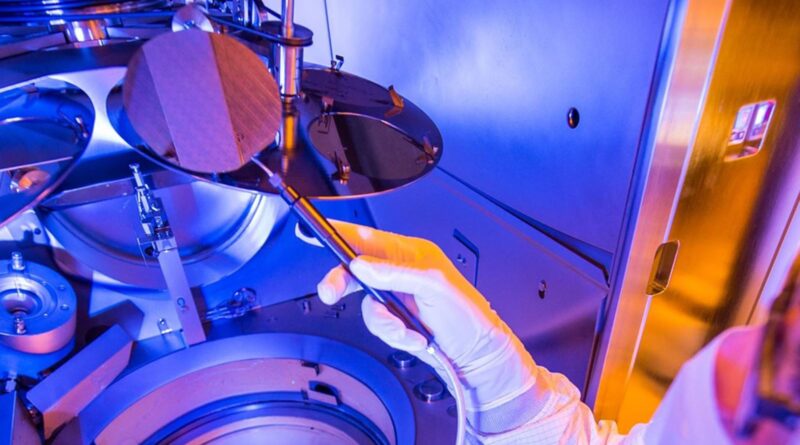
Raytheon, an RTX business, was awarded a contract from the Air Force Research Laboratory to develop domestic production capability for thin-film lithium niobate (TFLN) wafers, a material essential to high‑speed, secure communications and advanced sensing systems.
TFLN is used in next-generation photonics for many defense and commercial applications, including AI and computing technologies, data centers, and telecommunications. With supply currently dominated by foreign sources, Raytheon aims to ensure the US has a secure, domestic alternative available to the entire defense industrial base and commercial industries.
“Global access to TFLN has become increasingly constrained, with supply consolidation leaving U.S. companies vulnerable to international disruptions,” said Colin Whelan, president of Advanced Technology at Raytheon. “Through this effort, Raytheon will stand up an independent U.S. supplier of next‑generation TFLN, building an open, third-party source that can serve a broad range of defense and commercial customers.”
Under the contract, Raytheon’s Advanced Technology team will leverage its expertise in ion slicing to assist the US-based Company G&H in developing a manufacturing process for high-quality TFLN wafers. Once the process is established, production will transition to G&H in early 2026, which will manufacture the TFLN wafers at low-rate initial production. Raytheon and G&H will continue to collaborate closely to ensure successful technology transfer and production readiness.
“Establishing G&H as a robust, domestic merchant supplier of thin film lithium niobate is essential for creating next-generation faster and more efficient photonic transmission and sensing systems,” said Dr. Stratos Kehayas, president, Photonics at G&H. “G&H’s vertically integrated crystal and wafer manufacturing capabilities enable the reliable transition of this technology into U.S.-based production, strengthening supply chain resilience for both defense and commercial applications.”