By John Reardon, Editor-in-Chief, COTS Journal
The defense industry loves a good buzzword, and right now, “digital twin” is at the top of the command-and-control PowerPoint deck. In tactical briefings and procurement slide decks, the term is tossed around as a universal cure for operational friction. It is often pitched as a single, uniform concept that can model everything from the thermal fatigue of an F-35 turbine blade to the packet routing of a multi-domain theater network.
But here is the reality: treating a physical asset twin and a network digital twin as the same technological animal is a fundamental mistake.
As the military pushes toward Combined Joint All-Domain Command and Control (CJADC2), the systems engineering community must wrap its arms around the vast operational differences between these two concepts. More importantly, we must address a critical point of confusion in modern systems engineering: the difference between simulation and emulation. For prime contractors, system integrators, and defense personnel utilizing commercial off-the-shelf (COTS) technologies, confusing these terms is not just a semantic error—it is an architectural vulnerability.
Physical vs. Network: A Tale of Two Realities
To understand where platforms like Swish Data Digital Twins fit into the tactical landscape, we must first separate physical replicas from network abstractions.
|
The Physical Asset Twin
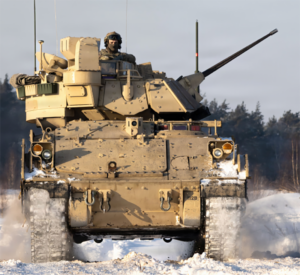
The traditional digital twin is born in the world of mechanical engineering. When you build a digital twin of an armored vehicle or a transport aircraft, you are mapping physical matter. You are feeding a model with telemetry—vibration data, thermal cycles, structural stress, and hydraulic pressures.
This model is strictly bound by Newtonian physics. The goal is predictable and mechanical: calculate material degradation, optimize the supply chain, and conduct predictive maintenance before a part fails in theater.
The Network Digital Twin
A network digital twin operates in a completely different dimension. A tactical data network is not bound by physical wear and tear; a router does not route packets slower because it is “tired.” Instead, a network is an incredibly dense, chaotic ecosystem of software configurations, dynamic routing protocols, security policies, and firmware interactions.
As detailed by network validation specialists at Forward Networks Digital Twins, a true network twin is a software-copy model of the entire network infrastructure. It does not look at the physical chassis of a switch; it ingests the exact configuration states, routing tables, and access control lists (ACLs) of every node across the enterprise. It builds a mathematically accurate map of all possible packet paths.
While a physical twin looks for material structural failure, a network twin looks for logical policy violations, routing loops, and hidden security vulnerabilities.
Simulation vs. Emulation: The Line in the Sand
For engineers designing AI-driven cyber ranges or mission-rehearsal environments, the distinction between simulation and emulation is the difference between guessing and knowing.
Simulation is an approximation of reality. A network simulator uses mathematical models to mimic how a network should behave under specific conditions. It abstracts the underlying technology. If you simulate an enterprise network, you are using a mathematical formula to predict latency and throughput. It is excellent for high-level capacity planning, but it lacks the granularity to capture real-world software glitches, configuration drift, or zero-day exploits.
Emulation, on the other hand, runs the actual operational software. A network digital twin built for high-stakes defense applications leverages high-fidelity emulation. It replicates the behavior of a device so precisely that the network operating system cannot tell the difference between the physical COTS hardware and the virtual instance.
As explored in deep-tech frameworks like the Keysight Automated Creation of Network Digital Twins White Paper, automated ingestion allows engineers to capture running configurations from live networks and instantly generate a runnable, emulated replica. This is not a simplified model; it is a live, sandboxed copy of the network that processes traffic, executes routing protocols, and fails exactly like the real-world system.
Wargaming and Cyber Resilience at the Tactical Edge
In the 21st-century battlespace, the network is the weapon system. If an adversary disrupts our tactical data links, our precision-guided munitions, automated sensors, and command posts are neutralized. This reality has turned network twins into critical infrastructure for modern defense.
1. 21st-Century Wargaming
Modern electronic warfare and cyber operations cannot be safely tested on live military networks without risking catastrophic self-inflicted outages. According to the strategic insights in the Keysight Network Digital Twins for Wargaming White Paper, emulated network twins provide the ultimate safe space for cyber ranges.
Commanders can launch devastating, simulated cyberattacks against a perfectly emulated replica of their own command network. This allows them to see exactly how malware propagates through specific switches, verify if firewalls drop the malicious packets, and train cyber defense teams against realistic threats.
2. Securing the OT/IoT Perimeter
Military bases and tactical operational centers are packed with Operational Technology (OT) and Internet of Things (IoT) devices—everything from fuel telemetry sensors to connected perimeter cameras. These systems are notoriously difficult to secure because they often run legacy, un-patchable software.
Security researchers highlight this vulnerability in the Armis Centrix Digital Twin for OT/IoT Security Brief. By building a network twin that maps every connected OT asset, defense teams can continuously monitor device behavior, analyze traffic anomalies, and find hidden attack vectors. This allows operators to isolate compromised systems without taking critical base infrastructure offline.
3. The Golden Dome: AI Cyber Ranges and Sensing
The integration of artificial intelligence into electronic warfare demands a continuous loop of testing and sensing. Concepts like the Keysight Golden Dome Framework showcase how AI-driven cyber ranges rely on network digital twins to simulate complex electromagnetic spectrum environments. By combining RF sensing with automated network emulation, the military can test how electronic warfare jamming affects tactical IP networks in real time.
The COTS Perspective: Architectural Integrity
From the editorial desk of COTS Journal, the shift toward network digital twins represents a major win for open architecture and commercial tech adoption. The military can no longer afford to rely on proprietary, siloed hardware platforms that take a decade to update. By leveraging COTS-based virtualization, containerization, and advanced software platforms, organizations like Swish Data allow the DoD to rapidly scale its testing infrastructure.
However, system integrators must remain vigilant. A network digital twin is only as good as the fidelity of its data ingestion. If your twin relies on stale configuration data from last month’s exercise, your wargaming results will be fundamentally flawed. Automated, real-time configuration collection must be built into the core architecture of our defense networks.
The Path Forward
The term “digital twin” is not a one-size-fits-all label. While physical twins will continue to keep our aircraft flying and our vehicles moving, it is the network digital twin that will keep our data flowing and secure our command posts from sophisticated cyber incursions.
We must move past simple simulations and embrace high-fidelity, emulated environments. In an era where the electromagnetic spectrum and the digital network are contested domains, the ability to test, break, and heal a network in a sandbox environment is no longer a luxury—it is a mandatory requirement for mission success.