BLACKTHROAT FROM ANNAPOLIS MICROSYSTEMS
By John Reardon, COTS Journal
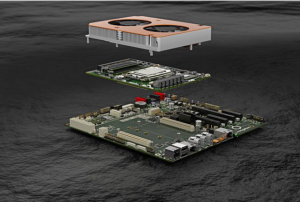
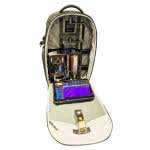
The tactical edge is no longer just a physical location—it is an electro-magnetic battleground requiring uncompromised high-performance computing (HPC). Driven by the immediate needs of the modern dismounted soldier, the defense industry has pushed processing power out of air-conditioned server rooms and directly into rugged, battery-powered manpacks. Annapolis Micro Systems has thrown down a massive gauntlet in this space with its BLACKTHROAT Spectrum Analyzer & Waveform Generator, a ruggedized system that crams a Direct RF supercomputer into a soldier’s backpack.
However, cramming high-end field programmable gate arrays (FPGAs) into a wearable profile creates an incredibly tight design envelope. Annapolis Micro Systems boldly claims that BLACKTHROAT is the most advanced signaling solution in the world. To verify if this technology truly changes the front line or merely overburdens the soldier, we must deeply analyze the harsh physical realities of Size, Weight, and Power (SWaP) optimization alongside its competitive landscape.
Inside the BLACKTHROAT Architecture
The primary innovation of the BLACKTHROAT platform centers around its exceptional data conversion speeds. Annapolis Micro Systems has integrated the Altera Agilex 9 MCP1 Direct RF-Series FPGA, delivering an astounding 64 GSps (Giga-Samples per second) real-time spectral analysis and waveform generation capability natively.
Historically, processing high-frequency signals required heavy, power-hungry analog down-conversion hardware. BLACKTHROAT completely bypasses this limitation by digitizing analog waveforms directly at the antenna interface across an ultra-wideband spectrum of 0 to 32 GHz.
By positioning data converters immediately adjacent to the sensor array, the system eliminates traditional intermediate frequency (IF) stages. According to Noah Donaldson, Chief Technical Officer at Annapolis Micro Systems, this shift represents a wider industry transformation:
“With converters increasingly positioned close to the sensor, optical I/O is becoming more prevalent in multi-function EW, phased array radar, cybersecurity network processing, and high-performance computing.”
This direct-sampling approach provides dismounted infantry with unprecedented real-time signal visibility. A single soldier can map localized electronic warfare (EW) environments, analyze complex radar signatures, and operate secure software-defined radios (SDR) simultaneously from a standalone tactical backpack.
Redefining Wearable SWaP-C for the Dismounted Soldier
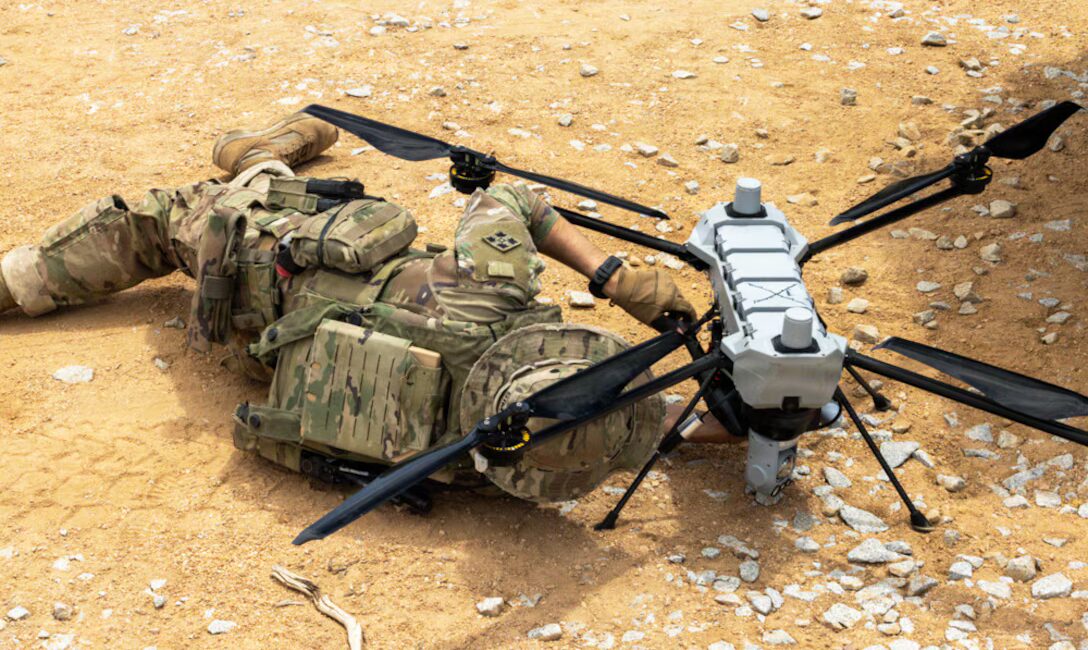
Deploying high-performance computing on a human frame demands radically different optimization parameters than vehicle-mounted or airborne OpenVPX systems. In vehicle configurations, thermal management relies on ample space for forced-air induction or liquid cooling loops. For a wearable manpack, thermal energy must dissipate efficiently without venting blistering air onto the soldier’s back or generating audible acoustic signatures that could give away a tactical position.
Physical balance is equally crucial. Standard electronic payloads often feature asymmetrical weight distributions that can rapidly accelerate physical exhaustion or cause strain during long rucks.
Portable configurations require unique optimizations:
- Conduction-Cooled Chassis: Sealed, finned enclosures isolate sensitive computing components from dust, rain, and mud without relying on loud, failure-prone external fans.
- Ergonomic Mass Distribution: The center of gravity must align directly with the human to maintain natural agility and prevent throwing the soldier off-balance.
- Rapid-Harness Integration: Quick-release mechanisms are required so soldiers can instantly shed the pack in emergency situations or ambushes.
- Power-to-Weight Efficiency: Every additional pound of lithium-ion battery pack directly reduces the mission runtime or cuts down on the amount of vital ammunition and water a soldier can carry.
The Low-Latency AI and Signaling Edge
In modern electronic warfare, latency is a definitive metric of survival. Traditional digital signal processing architectures struggle with a distinct “sampling bottleneck”: data must travel from the analog antenna, through long copper traces, into a standalone ADC, and finally pass over a congested bus to reach the processor.
BLACKTHROAT’s direct conversion architecture reduces this latency to absolute physical limits. Operating at 64 GSps allows the system to capture, process, and manipulate waveforms almost instantly.
By packaging ultra-fast data converters directly onto the silicon, the architecture eliminates the traditional analog front-end bottlenecks that have long plagued high-end military systems. This enables immediate cognitive radio operations, allowing troops to dynamically hop frequencies and dodge aggressive enemy jamming attempts in real-time.
Advanced Phased-Array Radar
Processes complex incoming sensor feeds concurrently, giving small tactical units localized situational awareness that previously required a dedicated command vehicle.
Battlefield AI Acceleration
The underlying Altera Agilex 9 fabric provides massive parallel computing pipelines. This allows machine learning algorithms at the edge to immediately classify unknown emitter signals, identify anomalies, and execute automated electronic counter-measures (ECM) before an adversary can register the interception.
Cross-Industry Integration: From RF Subsystems to Tactical VR
The extreme throughput of modern field-wearable processors shares a surprising, direct parallel with another prominent edge technology: tactical Augmented and Virtual Reality (AR/VR), such as Microsoft’s Integrated Visual Augmentation System (IVAS).
Early deployments of military VR systems faced heavy criticism from field testers due to high latency. When sensor data processing lags behind a soldier’s physical head movements, it creates a sensory mismatch that causes immediate nausea, disorientation, and dizziness—unacceptable liabilities in a live combat scenario.
The underlying solution to both problem sets is identical: ultra-low latency edge processing. While Microsoft focuses on reducing photon-to-motion latency for heads-up displays, Annapolis Micro Systems optimizes the RF-to-digital data loop.
By demonstrating that high-bandwidth, multi-gigasample computing can safely operate within a battery-powered, soldier-worn footprint, systems like BLACKTHROAT pave the clear technical path for future integrated combat ensembles. Someday, real-time localized electronic threat maps could feed directly from a backpack supercomputer into a soldier’s tactical visor with zero perceptible delay.
The Architectural Divide
This is exactly where the BLACKTHROAT system draws its line in the sand. Annapolis Micro Systems bypasses the general-purpose OS layers altogether. They don’t want to run your local mapping server; they want to conquer the electromagnetic spectrum. By utilizing the native Altera Agilex 9 Direct RF FPGA fabric with its 64 GSps sampling capabilities, BLACKTHROAT digitizes 0 to 32 GHz right at the sensor array without the latency penalties of moving data across an x86 system bus.
The industry’s commercial-off-the-shelf (COTS) ecosystem also includes lightweight, highly specialized wearable hubs tailored beyond Nett Warrior program. Systems like the Black Diamond APEx Predator or Samsung-backed edge handhelds focus heavily on minimal power consumption, leveraging low-wattage ARM or Intel Atom architectures. They excel at keeping a soldier unburdened over long Journies, but they lack the processing pipelines required to execute high-bandwidth cognitive jamming or real-time radar processing on the move.
While others excels at bringing heavy x86 server architectures and massive storage arrays to rugged mobile environments, they typically rely on multi-chip architectures or external mezzanine cards to ingest complex RF data. On the other side, Samsung’s defense partners leverage ultra-efficient commercial mobile processors. These solutions offer fantastic battery lifespans and compact footprints, but they simply lack the raw mathematical throughput required for wideband, real-time spectral synthesis.
BLACKTHROAT successfully carves out its niche right in the middle: it sacrifices the general-purpose software flexibility of a x86 processor and the featherweight profile of a commercial handset to deliver unmatched, low-latency electronic warfare capabilities directly to dismounted personnel.
 Challenging the “Most Advanced” Claim
Does the BLACKTHROAT system truly deserve the title of the world’s most advanced portable signaling solution? The answer requires a nuanced look.
If your operational metric is raw, real-time direct digitization speed at the antenna, the data speaks for itself. Capturing a 32 GHz swath of spectrum at 64 GSps inside a manpack is a stellar engineering feat.
However, calling any platform a definitive “most advanced solution” ignores the complex trade-offs inherent to wearable military hardware:
The Programming Hurdle
FPGAs are notorious for complex development cycles. Writing code for an Altera Agilex 9 chip demands specialized HDL engineering expertise. Compared to the accessible software environments of x86 or ARM-based competitors, modifying tactical capabilities on the fly in the field remains an uphill battle.
Battery Lifespan Realities
Running a high-performance 64 GSps system draws a massive amount of power. Even with excellent power management, a soldier can only carry so many batteries. If a system runs out of power midway through an extended multi-day operation, its advanced processing capabilities quickly turn into dead weight.
The Specialization Trade-Off
BLACKTHROAT is a highly optimized signaling instrument. It does not replace the general-purpose tactical computers needed to run complex local mission planning software, extensive database registries, or coordinate broad network routing.
Conclusion: Balancing the Tactical Scales
The BLACKTHROAT WSBA10 represents a major shift in how the defense industry approaches edge computing. Annapolis Micro Systems has successfully proven that true high-performance computing can be packed onto a soldier’s back without impeding field maneuverability.
The system provides small, distributed units with independent electronic warfare and signals intelligence capabilities that previously required a dedicated command vehicle or over-the-horizon support.
However, this processing power introduces clear trade-offs in power consumption, system weight, and software complexity. As defense primes continue to refine wearable technology, the focus must remain squarely on the soldier. The finest supercomputer in the world is only as good as the human operator carrying it into battle.