Military systems designers today grapple with an unrelenting flood of data. Sensors, platforms, and networks across domains generate telemetry at scales that overwhelm traditional processing pipelines. In contested environments, where decisions must occur in minutes or seconds, delays in data fusion, anomaly detection, or workflow orchestration can erode tactical advantage. For program managers and engineers building C4ISR, electronic warfare, unmanned systems, and JADC2-aligned architectures, the integration of reliable artificial intelligence (AI) into operational data flows is no longer experimental—it is foundational to maintaining decision superiority.
One organization has demonstrated a practical path forward. Big Duck Applied Sciences (BDAS) developed and deployed a fully integrated AI agent workbench that has operated continuously in Fortune 50 enterprise’s data operations for more than two years. Handling hundreds of content delivery and telemetry jobs daily, this system stands as one of the few known production examples of a mature, agent-driven workbench embedded directly in high-volume operations. Its longevity and performance offer engineers’ concrete lessons for applying similar capabilities in defense contexts.
The Data Overload Challenge in Modern Military Systems
Defense platforms increasingly operate as nodes in vast, interconnected ecosystems. A single radar or unmanned aerial system can produce streams of raw data that, when aggregated across a battlegroup or joint force, reach petabyte levels. Legacy architectures—often built around static databases, rule-based scripts, and human-intensive analysis—struggle with velocity and variety. Operators face alert fatigue, while analysts spend disproportionate time on routine triage rather than high-value interpretation.
This problem intensifies in multi-domain operations. Joint All-Domain Command and Control (JADC2) envision seamless data sharing from undersea to space, but realization demands systems that not only ingest and process information but also act autonomously within strict governance bounds. Predictive sustainment, real-time sensor-to-shooter loops, and resilient network management all require AI that integrates deeply with existing telemetry and command infrastructures without introducing fragility or unacceptable latency.
Five years ago, most defense AI efforts remained in isolated pilots or sandbox environments. Models showed promise in controlled tests but faltered under production loads, integration complexities, or the need for continuous adaptation. Today, the landscape has shifted toward agentic systems—autonomous or semi-autonomous agents that orchestrate tasks, learn from outcomes, and collaborate with human operators. Looking ahead five years, expect these agents to incorporate advanced multi-modal reasoning, tighter edge-cloud federation, and embedded cyber resilience, enabling persistent operations even in degraded or disconnected settings.
Scale of the Data Challenge Military sensor networks can generate terabytes per hour during high-intensity operations. Traditional ETL (extract, transform, load) processes introduce delays incompatible with time-sensitive targeting or electronic warfare response. Agentic AI addresses this by distributing intelligence closer to the data source while maintaining centralized oversight.
The Technology: AI Agents and Integrated Workbenches
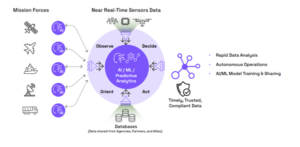
At its core, an AI agent workbench serves as an orchestration platform. It enables the creation, deployment, monitoring, and evolution of specialized agents that interact with data sources, execute workflows, and surface insights or actions. Unlike narrow point solutions, a mature workbench coordinates multiple agents—some focused-on anomaly detection in telemetry, others on predictive routing, content optimization, or compliance auditing—under a unified governance layer.
Key technical elements include:
- Multi-Agent Orchestration: A central coordinator manages handoffs between agents, incorporating fallback logic and human approval gates where required. This supports complex chains, such as ingesting raw telemetry, enriching it with contextual models, detecting patterns, and triggering downstream automations.
- Deep Telemetry Integration: Agents connect natively to streaming pipelines, data lakes, and legacy systems. Normalization, feature extraction, and real-time inference occur at scale, with demonstrated throughput exceeding 500 jobs per day in production.
- Explainability and Governance: Every agent decision generates auditable traces. Model versioning, bias monitoring, and policy enforcement align with emerging DoD AI Assurance standards. This transparency is critical for certification in safety- or mission-critical applications.
- Resilience and Scalability: Distributed design tolerates node failures and supports hybrid edge-cloud deployments. Adaptive learning allows agents to refine performance based on operational feedback without full retraining cycles.
Compared to early generative AI experiments, today’s workbenches emphasize reliability over raw capability. They incorporate hybrid architectures — combining symbolic reasoning with neural models—and prioritize low-latency inference suitable for embedded or forward-deployed systems. In five years, integration with neuromorphic hardware and quantum-assisted optimization could further compress decision timelines while reducing power demands on platforms.
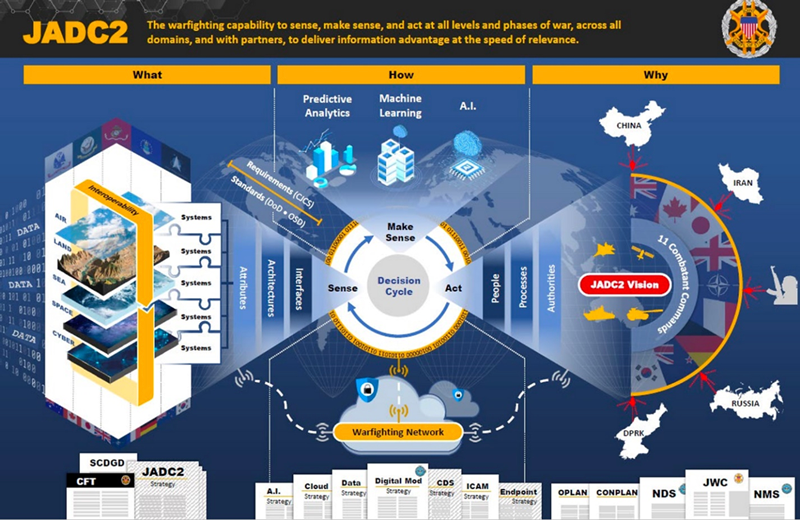
Figure 1: Conceptual AI Agent Workbench Architecture
Applying Agentic AI to Defense Data Operations
Engineers can apply these principles by starting with well-defined, high-pain workflows. Begin with telemetry processing: deploy agents to monitor streams for deviations, correlate across sources, and generate prioritized alerts. Extend to predictive maintenance by fusing platform health data with historical patterns, reducing unplanned downtime on vehicles, vessels, or aircraft.
In command-and-control contexts, agent workbenches accelerate sensor fusion and course-of-action generation. Agents can maintain digital twins of network states, simulate impacts of electronic attack, and recommend resilient routing—all while logging actions for after-action review. For unmanned systems, onboard or tethered agents enable collaborative swarming behaviors with minimal operator input, enhancing survivability in contested airspace or maritime domains.
Security remains paramount. Implement zero-trust access, encrypted agent communications, and runtime monitoring to harden against adversarial machine learning attacks. Open standards for interfaces (in the spirit of MOSA and SOSA) facilitate integration with existing COTS hardware and software ecosystems, allowing incremental adoption without rip-and-replace overhauls.
One production example illustrates the potential. In a high-volume commercial data environment with defense relevance, an AI agent workbench has run continuously for over two years. It orchestrates telemetry analysis and content delivery pipelines, achieving sustained efficiency gains through automation and proactive optimization. While specific product details remain proprietary, the architecture demonstrates that robust agent governance and integration are achievable today, not merely theoretical.
Table 1: Evolution of AI in Data Operations
|
Aspect |
~5 Years Ago |
Today (Production Examples) |
~2 Years Forward Projection |
|
Primary Focus |
Isolated model pilots |
Orchestrated multi-agent systems |
Autonomous cognitive teams with edge dominance |
|
Throughput |
Dozens of jobs/day |
Hundreds+ with governance |
Thousands across domains |
|
Human Role |
Heavy supervision |
Supervised autonomy |
Strategic oversight only |
|
Defense Relevance |
Lab demonstrations |
JADC2 / predictive sustainment enablers |
Fully integrated MDO decision engines |
Implementation Considerations and Future Outlook
Successful deployment requires cross-functional teams: data engineers for integration, domain experts for validation, and AI specialists for agent design. Start small—target one critical workflow—then scale. Measure success through metrics such as reduced mean-time-to-insight, lower operator workload, and improved system availability.
For military systems designers, our experience underscores that production-grade AI workbenches are ready for defense adaptation. Whether enhancing C4ISR pipelines, bolstering EW resilience, or supporting unmanned autonomy, these technologies offer a pragmatic route to data advantage.
As threats evolve, the winners will be those who embed intelligent agents deeply into their operational fabrics. The workbench approach—mature, integrated, and proven at scale—provides a foundation for that transformation.
Additional Resources (Web-Exclusive Extension) Readers can access extended technical diagrams, sample agent workflow animations, and deeper discussion of JADC2 integration patterns at the COTS Journal website. These materials elaborate on edge deployment strategies and governance frameworks relevant to classified environments.
Timothy Lyons, the author, leads AI revenue initiatives at Big Duck Applied Sciences, focusing on telemetry middleware and agentic systems for demanding operational environments.