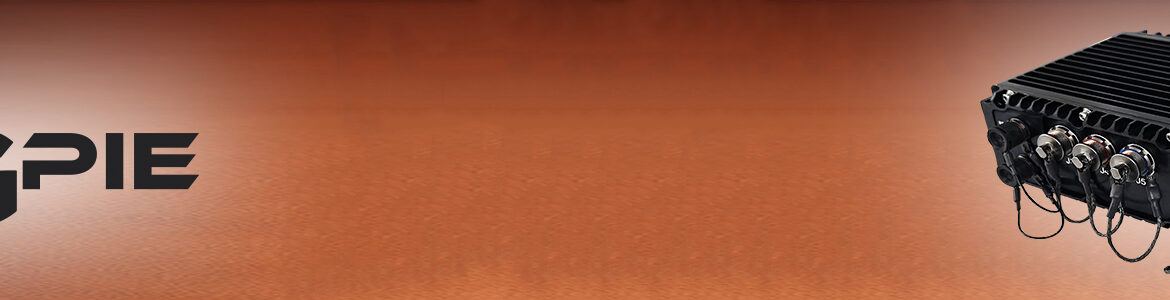
The Magpie II from Tekdense represents a substantial leap forward for military and aerospace engineers who need localized, high-performance computing in heavily space-constrained environments. As tactical environments become increasingly data-rich, demand for edge processing power has outpaced the capabilities of legacy hardware architectures. To address this critical operational gap, the newly optimized system is a next-generation Small Form Factor (SFF) Rugged Mission Computer designed to seamlessly manage complex, multi-domain deployment workloads without forcing system integrators to compromise durability or physical footprint constraints.
Engineered specifically to succeed the original processing platform, the system introduces a highly sophisticated multi-core processor architecture that drastically elevates overall computational throughput. This processing boost is backed by a major increase in system RAM, ensuring low-latency data handling and smooth multitasking when running algorithmic mission profiles simultaneously. By modernizing these internal components, the platform efficiently processes dense sensor data fusion and command-and-control applications on-site, eliminating the dangerous dependency on cloud communication infrastructure.
To balance this influx of processing power, the mechanical engineering team carefully optimized the system’s Size, Weight, Power, and Cost (SWaP-C) parameters. While the chassis features a slightly modified physical envelope to safely accommodate the expanded thermal and electrical demands of its advanced multi-core CPU, it retains the dense ruggedization qualities necessary to survive harsh shock, vibration, and extreme temperature ranges. This careful design balance allows defense teams to install the hardware directly into tight compartments within unmanned vehicles, mobile ground stations, and airborne pods where every millimeter matters.
To meet distinct integration requirements across military branches, the hardware platform is available in multiple variations, including the Magpie II-T and Magpie II-R variants. These tailored configurations let system architects choose the precise connectivity profiles, local storage capabilities, and specialized physical interfaces needed for their deployment. By providing a scalable, incredibly dense processing hub that handles next-generation military applications right at the edge, the platform sets a high benchmark for modular rugged computing. For engineering teams tasked with upgrading existing mission capabilities under restrictive spatial envelopes, this system delivers an immediate, combat-ready processing boost.