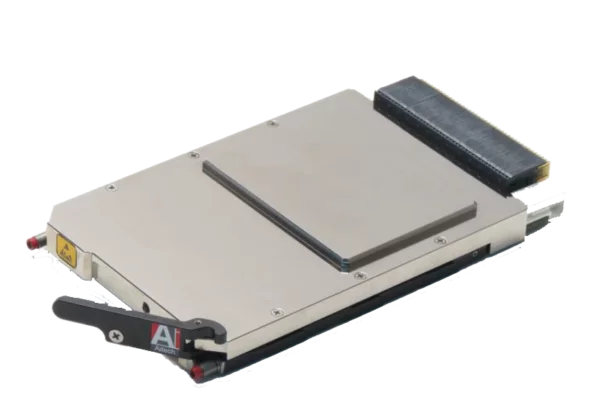
Aitech announced the new 3U VPX C530 and SOSA®-aligned 3U VPX U-C5300 GPGPU boards, the next generation of rugged AI GPU accelerators. The new C530 and U-C5300 deliver a substantial leap in AI compute compared to the previous generation. They provide significant improvements in AI inference, memory bandwidth, and graphics performance while maintaining compatibility with rugged VPX architectures.
Defense platforms generate unprecedented volumes of sensor and video data, and traditional CPU-based mission computers can no longer keep pace with the demands of AI inference, multi-stream HD video processing, and advanced sensor fusion. These new AI-enabled GPGPU boards provide the rugged, SWaP-optimized heterogeneous computing architecture needed to bring high-performance AI to the edge, enabling faster mission decisions, improved situational awareness, and greater operational autonomy.
Replacing previous-generation configurations, the new upgrades provide significantly higher AI inference throughput, enhanced graphics performance and greater memory bandwidth. This enables system integrators and mission computer manufacturers to run more sophisticated AI models, process additional sensor streams, and support next-generation autonomous capabilities without increasing platform size, weight, or power requirements.
The new AI GPGPU boards enable faster, more accurate performance in AI delivery, video analytics, image processing, object detection, and classification tasks. Both boards offer up to 9,728 CUDA cores for parallel processing, 304 Tensor Cores for AI inference, and 76 ray-tracing cores for real-time rendering. The boards deliver up to 35.8 TFLOPS of FP32 compute performance and 576 GB/s memory bandwidth, providing the processing power required for demanding real-time edge AI workloads.
The U-C5300 offers SOSA alignment for next-generation defense programs. For organizations pursuing open-architecture modernization initiatives, the U-C5300 simplifies integration, improves interoperability, and accelerates deployment across next-generation defense platforms.
“AI is transforming defense operations, but the challenge is delivering real-time intelligence where missions happen, making AI workload processing at the tactical edge mission-critical,” said Dan Mor, director of customer solutions, Aitech. “By bringing NVIDIA RTX Ada performance to rugged VPX architectures, the C530 and U-C5300 enable faster AI inference, real-time analytics and greater mission autonomy while supporting the long lifecycles, open standards and software continuity that defense programs require.”
Unlike many legacy rugged GPU solutions, the C530 and U-C5300 combine current-generation AI-enabled GPGPU technology with mission-proven ruggedization and open standards support. Existing CUDA-based applications can leverage the new architecture with minimal software disruption, providing a straightforward migration path while supporting future AI frameworks and evolving mission requirements throughout long program lifecycles.
C530: High-Performance GPGPU
The C530 multi-head GPGPU is a powerful, AI-enabled 3U VPX GPGPU board that delivers remarkable performance in a compact, rugged form factor. With a powerful compute architecture, it suits compute-intensive applications, including unmanned and autonomous vehicles, intelligence, surveillance, and reconnaissance (ISR), targeting systems, advanced video processing, and sensor fusion.
U-C5300: SOSA-Aligned High-Performance GPGPU
As adoption of SOSA and OpenVPX architectures continues to expand across the US Department of War and allied programs, the U-C5300 has the same architecture upgrade as the C530. It aligns with the SOSA Technical Standard, helping defense programs meet interoperability requirements while enabling smoother integration from development through deployment.
The updated C530 and U-C5300 GPGPU boards support AI processing across a range of defense applications, including:
- Autonomous navigation, sensor fusion and target recognition for ground mobile vehicles
- Real-time video analytics and EO/IR processing for airborne platforms
- Combat management AI and radar processing for naval applications
- AI-based signal classification for electronic warfare (EW) systems
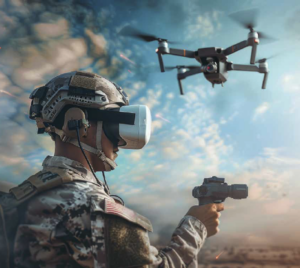
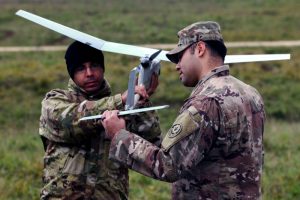
- Object detection, classification and tracking for unmanned aircraft systems (UAS)