 By Robert Brull, CEO, FibreCoat
It was back in 2013, a full 13 years ago, that Europe first started talking about ‘strategic autonomy’. The European Council, then chaired by Herman Van Rompuy, used it in the context of defense, saying the bloc should build its technological and industrial base so Europe could act with less dependence on others. Three years later, Federica Mogherini, then EU High Representative, put ‘strategic autonomy’ in the EU Global Strategy. Now, it had a broader meaning: EU agency, the ability to act in its own interests around the world. In 2021, it came up again, and its definition expanded to include supply-chain resilience.
If that strategic autonomy never arrived for Europe, it’s perhaps because it seemed little more than political jargon, articulating a direction of travel that never really seemed like a priority. Today, with the collapse of the rules-based order and geopolitical winds blowing violently in all directions, that longstanding goal of the EU suddenly seems urgent. The world has become dangerous. If there was any doubt that the current US administration might feel differently about Europe than its predecessors did, the saga over Greenland banished it, showing in black and white that sometimes even old friends disagree.
Europe needs to stand on its own two feet – both to defend its interests and to be a stronger partner to its allies, including the US. But achieving strategic autonomy isn’t as simple as spending money, or even building military equipment. It’s also about who controls that equipment and its components. A basic principle of the modern supply chain is that whoever owns the code, architecture, or encryption keys owns the system; in many cases, Europe doesn’t own these things. That means that, in theory, its equipment could be shut off or restricted. It’s a concerning situation.
Some European countries are responding positively. According to reports, Germany is pivoting away from the shambolic Future Combat Air System (FCAS) project and quietly building a similar national system, one that links combat aircraft, drones, satellites, and sensors, with Helsing. France is also developing Arcadia, a battlefield command system modeled on the US’s Maven, which combines drone footage, satellite data, sensor feeds, and intelligence, then uses software to identify patterns and spot possible targets so that commanders can act quickly. But on the whole, across Europe, we’re not even close to where we must be. All of Europe has to champion the approach that Germany and France are taking independently, integrate it into its mode of operating, and make it pan-European.
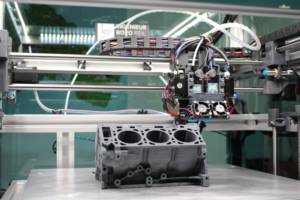
Reforming the European system will take work; there’s no denying it. Europe’s approach to procurement is outdated and wholly ill-suited for modern warfare. Today’s conflict is about speed, innovation, and adaptability; Ukraine churns out ever-more sophisticated drones via 3D printers at a rate that should embarrass Europe for procuring large, expensive platforms that take years to build. Innovative smaller companies must have a seat at the table. And though I’ve been talking mostly of ‘Europe’, the region is not like the United States: it’s neither a federation nor even a confederation; some countries are in the EU, and some aren’t; and the result is often that there is little of the standardization and cooperation that a fruitful regional approach to defense sorely needs. We need to build the same technology, scale it together, share costs, and make it all interoperable.
In an ideal scenario, Europe could buy technology from the US and its allies, but manufacture, store, and maintain it locally so Europe retains full control. Since that’s unlikely, Europe should do what has worked so well in the US and establish bodies designed specifically to encourage defense innovation and the rapid deployment of new technology in the field. It wouldn’t be impossible to create a defense-focused arm of the European Commission, with bodies like a European Defense Innovation Unit (DIU), the Defense Advanced Research Projects Agency (DARPA), and the German Federal Agency for Breakthrough Innovation (SPRIND). This could have a three-tier governance structure: a strategic council with key stakeholders, including startups; an executive board with full-time members; and program managers overseeing large €50-200 portfolios. Overall, this would make full use of the many great scientists and engineers Europe’s outstanding educational institutions produce and nurture every year.
This is not about turning our backs on our allies. It’s about being a better ally by being independent, able to defend our own interests without their help, and able to support our allies when our interests fully align with theirs. The term ‘strategic autonomy’ has taken on new meaning in a world where the international system has shifted from a unipolar order to a multipolar reality, war rages on Europe’s eastern flank, grey-zone aggression intensifies, and politics at home and abroad make the future look very uncertain. But Europe can create certainty by changing its regulations. We need this to happen now.