
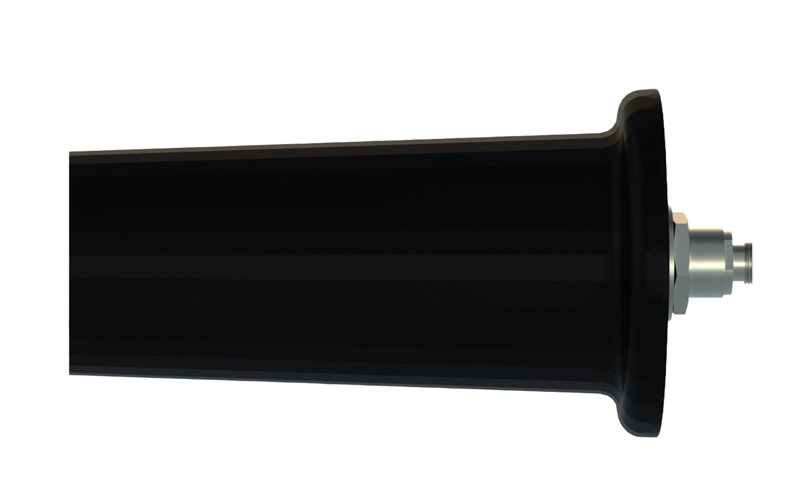
Infinite Electronics, a global platform of specialized connectivity manufacturing companies, has launched a new lineup of Pasternack® multi-constellation GNSS antennas with advanced anti-jamming technology engineered to improve positioning, navigation and timing (PNT) performance in increasingly congested RF environments.
Infinite Electronics will showcase connectivity solutions across its portfolio for commercial and industrial unmanned systems. “As UAV platforms are deployed in more demanding commercial, industrial and public safety applications, reliable GNSS positioning has become increasingly important,” said Gorden Cook,
President & General Manager, RF & Microwave Business Unit at Infinite Electronics. “Pasternack’s new anti-jamming GNSS antennas are designed to help customers maintain reliable positioning in challenging RF environments, supporting the performance and dependability today’s unmanned systems require.
Designed for modern Global Navigation Satellite System (GNSS) deployments, the new antennas support GPS, Galileo, GLONASS, BeiDou, QZSS, NavIC, and regional augmentation systems across the L1/E1/B1, L2, and L5/E5 frequency bands. Their advanced interference mitigation technologies help maintain receiver performance by suppressing low-elevation jamming sources, rejecting adjacent-band interference and supporting reliable operation in challenging RF environments. Built to MIL-STD-810 requirements, the antennas are engineered for demanding outdoor deployments in fixed, mobile, and infrastructure-based systems.
The new anti-jamming GNSS antennas expand Pasternack’s growing portfolio of GNSS, RF, and positioning solutions for autonomous and unmanned systems, mission-critical navigation, precision timing and synchronization, transportation, public safety, critical infrastructure and geospatial technologies, providing UAV manufacturers, integrators and operators with an additional option to improve positioning reliability in increasingly congested RF environments.